Description
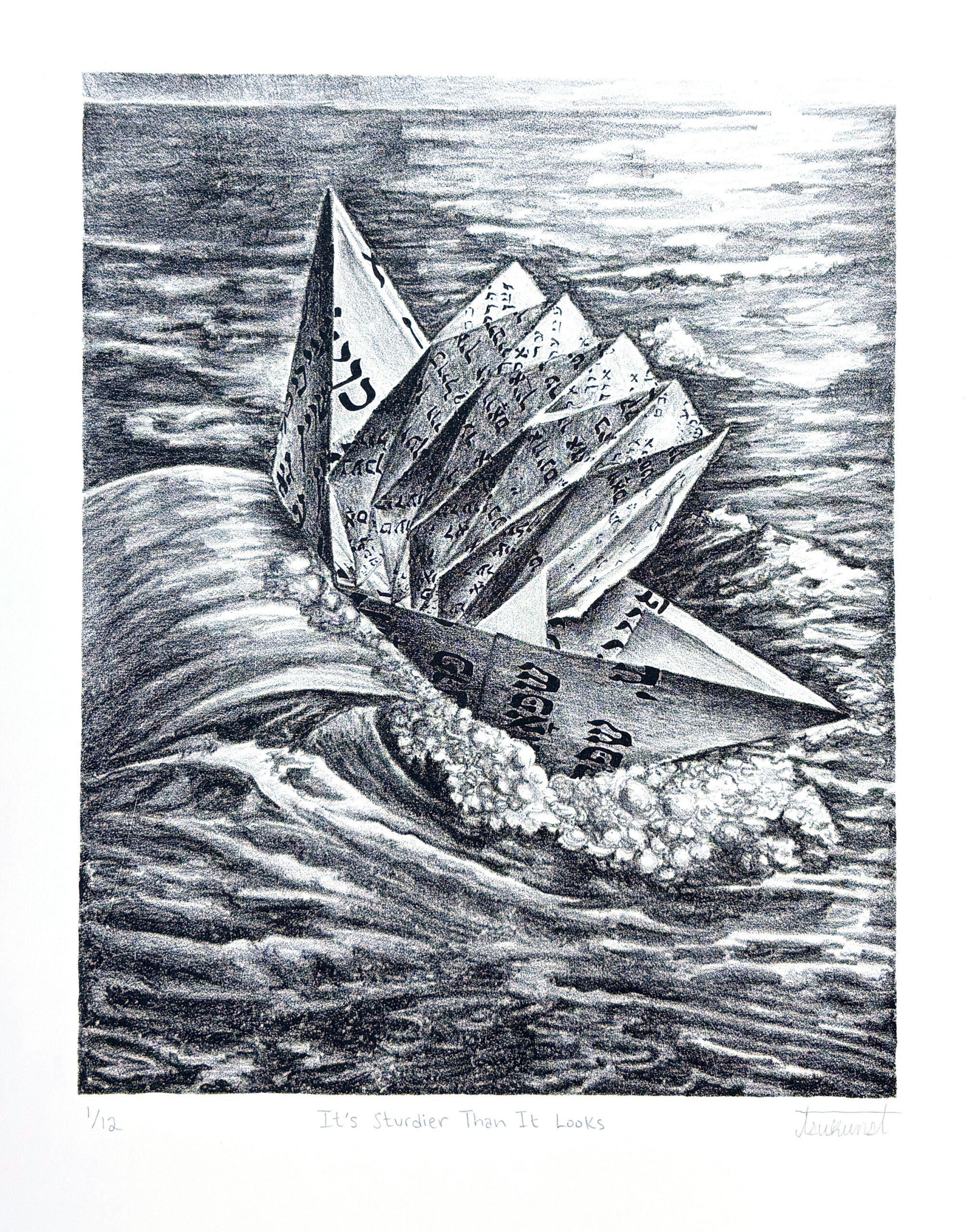
If you look closely, you can see that this boat is folded from no ordinary paper, but a bletl from a mayse-bikhl – a page from Eliezer Shteynbarg’s Hamer un ayzn, to be exact! The full print shows a seemingly fragile, intricately folded paper boat with yidishe oysyes, riding atop the waves of a choppy sea. Shteynbarg allegorical tale, “vi azoy di feygele hobn gelernt khumash,” is all about our relationship to stories. He imagines books as trees – organic and growing, a place to live in. The characters in the story wonder in awe about the moon’s capacity to be eternally itself and yet new every time, just as we might feel about a transformative story: “nay, nay un alts di eygene alte.”
I think this is a great story for Yiddishists, Jewish culture workers and educators. It highlights the delightful side of re-experiencing the joy of discovery and connection through new listeners. And it also reflects the slippery, tricker nature of stories: bound to shape shift through each new interpretation, defying the mastery of a definitive telling. Sometimes what you thought was ankle-deep story holds endless depths to fall into. Sometimes what seems the most fragile and flimsy is the perfect vessel to stay afloat.
So here we are, in the turbulent, rising waters. What stories must we reach for together to build our ark? What corners will touch with each new fold? Will our stories be buoyant, will they put down roots like a tree or guide our movements like the moon? Or maybe they will be like the water itself, echoing the depths of our grief and overwhelm so that we are submerged in something of equal weight. This is how we learn our stories.